.png)


Search
Search this site
528 results found with an empty search
- In the Trenches: Natural Family Planning
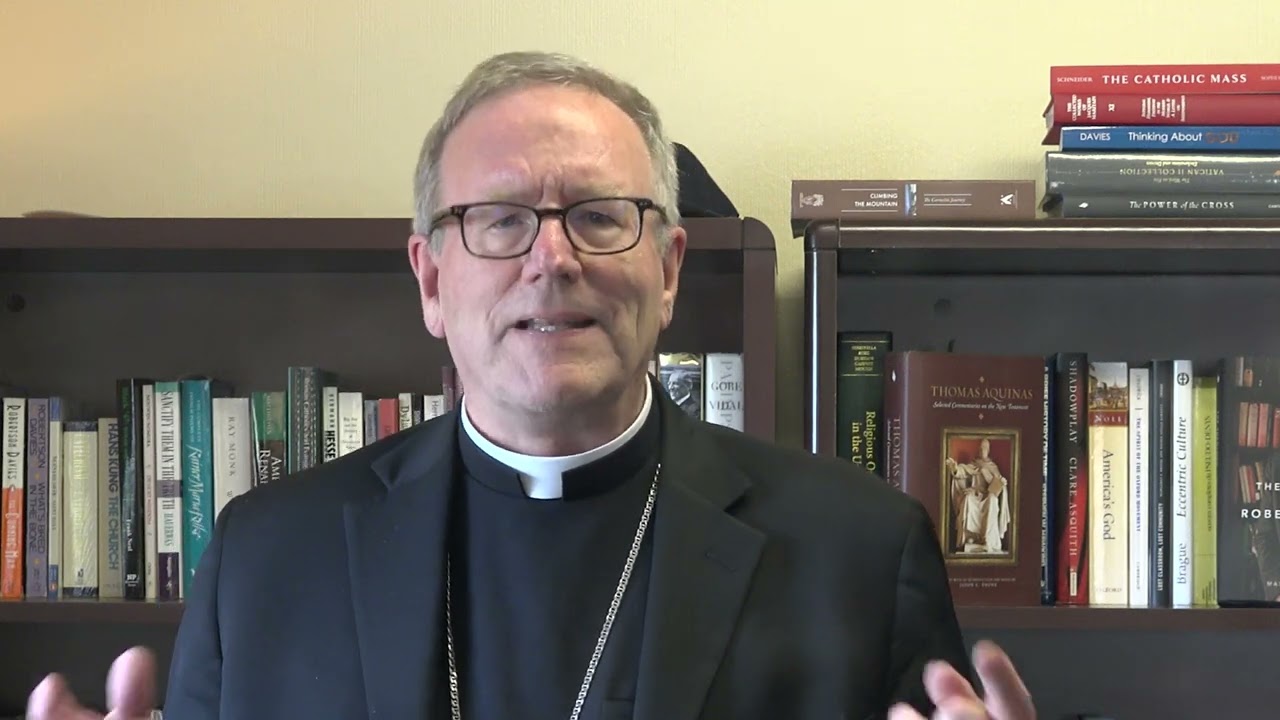
A message from Most Rev. Robert E. Barron, Chairman of the USCCB Committee on Laity, Marriage, Family Life & Youth, promoting Natural Family Planning Awareness Week. By Kara Gotshall For the ICR Natural Family Planning (NFP) is promoted as being healthy for marriages and families, breathing new life and grace into the home. At the same time, couples know that NFP takes discipline to learn; it requires self-control and sometimes even results in a “surprise” baby! How could NFP help couples grow closer to God? The answer: when couples track their fertility with NFP, they face the reality that God created their bodies’ fertility, and He wants them to cooperate with His plan to bring children into this world. It can be hard, challenging and even painful at times. Living in this truth, however, becomes a source of grace in their lives. NFP creates an opportunity to encounter God in your marriage. With practice, you can learn how to draw closer to God and each other as you use NFP in the trenches of married life. Is it time for another baby? In section 10 of Pope Paul VI’s 1968 encyclical “ Humanae Vitae ” (Faith and Reason), titled “ Responsible Parenthood ,” the Church permits couples to use NFP to avoid pregnancy for serious or grave reasons, while reminding them: “… they are not free to act as they choose in the service of transmitting life, as if it were wholly up to them to decide what is the right course to follow. On the contrary, they are bound to ensure that what they do corresponds to the will of God the Creator.” If you are using NFP, you will need to regularly decide between abstinence and intimacy. There is a temptation to approach this conversation selfishly by asking, “do we want another baby?” Instead, you have an opportunity to view your family through God's eyes, asking, “Does God want us to have another baby?” NFP can provide you with a regular occasion to view your finances, health and the upbringing of your children through God’s eyes instead of just your own. Need a reminder? Try paperclipping a holy card of the Holy Family into your NFP chart. Are we done yet? Some couples may reach a point when they say, “We are done” having children. They may be at peace that their family has reached the size God intended due to health concerns, age or other reasons, and be confident in their discernment that God does not have any more children planned for them. As a Creighton NFP teacher, I have taught many couples approaching the menopause years who are avoiding pregnancy. Yet, when I ask them about their receptiveness to an unplanned pregnancy, they will often say, “we aren’t planning on it, but of course if it happens … it happens!” They continue to remember God is the Author of Life, often because they have spent years being open to His will for their family. If you are in this situation, you can continue to keep your marriage fruitful by turning your days of abstinence into an offering of prayer. While God is not calling you to the unity that would result in another child, you can unite in prayer for a particular intention close to both of your hearts. “Surprise” pregnancies! Unplanned pregnancies can happen for a variety of reasons. Perhaps the couple needed a more detailed or reliable charting method. Perhaps the couple was complacent or careless in their charting or perhaps the couple made an impulsive decision, using days of fertility even though they weren’t planning on a pregnancy. These pregnancies may be unplanned, but in many cases, it doesn’t come as a surprise! Even if the pregnancy has no apparent explanation, if a couple already sees their fertility as a gift from God, it is easier for them to also see the new life as a gift from God. If you have ever faced an unplanned pregnancy, you know how helpful it can be to reflect on your chart and discuss it as a couple. You may need to examine your charting habits, self-control or motives for avoiding a pregnancy. You might seek the opinion of your NFP teacher or switch to a different NFP method that suits you better. As a couple, it can become a time of growth as you come together on a plan moving forward in your marriage. If your pregnancy proves a significant burden for your family, remember that God wants to accompany you in your trial. He gave you the gift of your fertility, and now He has given you the gift of a new life. Just as you have seen your marriage through His eyes while using NFP, you can learn to see this new challenge through His eyes as well. If you need it, you can reach out for support from your parish or a pregnancy center. Do I have to chart? Charting is not obligatory, provided you are still pursuing God’s will by respecting the procreative nature of the marital act and are prayerfully discerning your family size. If you need to avoid a pregnancy, you may instead choose long-term abstinence as a couple. If you know God is calling you to another child, you may choose to leave the timing of the next pregnancy entirely in His hands. Based on my experience as a Creighton practitioner, however, I have three reasons that I would still encourage you to consider charting with an NFP method: First, when you choose not to chart your fertility, you are choosing to participate in God’s will passively. You do not have the same opportunities of knowing your bodies, discussing your fertility as a couple, and actively cooperating with God’s plan. Second, charting is a valuable tool for monitoring health. It can help you accurately determine your due date, and it can help you have safer and healthier pregnancies by detecting health risks in advance of conception. When NaProTechnology Medical Consultants treat health concerns such as hormonal imbalances, PMS or infertility, they base their recommendations on an accurate Creighton Model chart. An accurate long-term chart can become an extremely valuable health record. Lastly, it is practical to be confident when you are not in the early stages of pregnancy. Then you know if you can safely get dental X-rays, enjoy a glass of wine at dinner or go on a roller coaster ride with the kids this summer! A choice in the trenches “Behold, I stand at the door and knock. If anyone hears My voice and opens the door, I will come in and dine with him, and he with Me.” (Rev 3:20) When we are in the trenches of marriage, it can truly feel like a war sometimes! Remember that Jesus is always standing at the door and knocking, waiting for us to let Him in so He can help us fight our everyday battles. By charting your fertility with NFP, you can open that door as a couple, inviting Him into your home, your marriage and your family. Charting your fertility becomes a constant reminder to see the blessings, the challenges and the purpose of your marriage through the eyes of God. Parish & Diocese Resources provided by the USCCB July 20 - 26, 2025 Pursue a lasting love ... MARRIAGE Create hope for the future! Celebrate and reverence God's vision of human sexuality Natural Family Planning Awareness Week is a national educational campaign. The Natural Family Planning Program of the United States Conference of Catholic Bishops develops a poster each year with basic supportive materials. It is the individual dioceses, however, that offer a variety of educational formats in the local church to focus attention on Natural Family Planning methods and Church teachings that support their use in marriage. The dates of Natural Family Planning Awareness Week highlight the anniversary of the papal encyclical Humanae Vitae (July 25) which articulates Catholic beliefs about human sexuality, conjugal love, and responsible parenthood. The dates also mark the feast of Saints Joachim and Anne (July 26), the parents of the Blessed Mother. Pope Francis has designated that feast as World Grandparents Day, a fitting commemoration during National NFP Awareness Week! For further information, contact nfp@usccb.org . NFP Week Posters Poster Archives Liturgy & Prayers Articles Bulletin Inserts Couples' Stories Church Teachings Find an NFP Class in Person or Online More NFP and Related Resources Media Kit (social media graphics and web banners here) Celebrate National NFP Awareness Week in Your Area! NFP Awareness Week also celebrates grandparents!
- Coeur d’Alene teen lives to express his faith
Priesthood not out of the question for 16-year-old high school student Coeur d’ Alene faith- empowered teens came out in in solidarity as a community on May 20, 2025 to participate in the first youth-led Eucharistic Procession in their hometown inspired and led by 16-year-old Owen Keith, above with processional crucifix. (Courtesy photo) By Bryan Saye For the ICR It’s not every day you meet a teenager like Owen Keith. Some might say, however, there should be more like him. Keith, 16, lives in Hayden, Idaho, and is about to enter his junior year at Coeur d’Alene Charter Academy. In an era when convincing young people not to fear talking about their faith publicly or participating in parish life can be a challenge, he stands out as an unapologetic Catholic who isn’t afraid to express himself. He leads a busy schedule, competing for the local swim club in Coeur d’Alene, concentrating on school and working on his car, but Keith still manages to find ways to display his faith publicly, something he regards as an “integral” part of his life. Although he is involved with youth ministry at Pope Pius X Catholic Parish in Coeur d’Alene, he said lately he has “tried to involve [himself] more” as a leader. He was inspired by what he saw during an Exodus 90 Lenten program with other youth. “A lot of Catholic youth [were] getting involved,” Keith said of his peers during the Exodus program, citing some who were even younger than 16. As Holy Week approached, he felt a strong urge to find a way to answer the call to serve and to live out his faith. “When it comes to faith, so many people are on their own paths,” he said. “But they’re not [always] interested in getting other people [involved]. It loses the sense of community that we should have. Everybody should be hearing the voice of Christ. Everybody should be following the narrow path.” That’s when he came up with the idea to organize a Eucharistic procession. It just “popped into my head,” Keith said. He believes that living the faith needs to extend beyond Sunday mornings, that it should be “every day, all day.” Keith, who regularly accompanies his parents and grandparents to Mass, credited his entire family for the formation of his deep faith, but specifically cited his parents as the most obvious examples of how to live the Catholic faith. “They’re both very devout,” he said. “They’ve taught me really well. Faith is the most important thing in my life.” Having grown up in what he calls a “Catholic bubble,” he was anxious to share his faith. “Why not take it to the public?” he thought. Owen Keith (left) and Jason Chavez (right) in St. Thomas the Apostle Catholic Church before the start of the procession on May 20. (Photo/Lisa Ormond) He brought the idea to his parish leadership, eventually discussing it with Jason Chavez, founder of Communio CDA and director of faith at Holy Family Parish, and Wes Miller, director of faith formation and coordinator of Youth Ministry at St. Pius X. Keith said he let the adults handle the logistics, but that he was key to bringing in the crowds, speaking before Mass, making flyers, and sharing stories on the social media site Instagram. He was nonetheless unassuming about his participation. “[It was just] regular event spreading,” he said in a manner indicative of his humble character. “I had the least part in it. Everyone had this yearning to do something.” Over 300 Catholics joined the procession, making his efforts anything but “regular.” “I don’t think it was by human doing,” he said. When asked about public perception of the procession, he added, “It looked like they were thought-provoked. That’s the first goal, to make them think about it: ‘What’s this Catholic stuff all about?’” He recalled seeing a young father pushing his infant children in a stroller during the procession and watching him express himself, uninhibited. “He hit his knees and started praying. [It was] inspiring to see his faith in public,” Keith said. The procession left a profound impact on him. “I always want to reflect on the moment and think about the people and the amount of effort that went into it. The devotion of our community… really inspires me to be a better person.” So, what’s next for Owen Keith? “Maybe we’ll make this a yearly tradition,” he suggested, hinting that he’d like to combat the secularism of the month. While June, in recent years, has been reserved for secular agendas, Keith looks to reclaim it for the faith. “It’s the month of the Sacred Heart of Jesus,” he pointed out, with the Solemnity of the Sacred Heart falling on the Friday following the second Sunday after Pentecost. This year, it was celebrated on June 27. When asked whether he’s discerning the priesthood, he replied with a chuckle, “It should never be out of the options. Just don’t tell my girlfriend.”
- St. Pio relics to be displayed at St. Francis Xavior Parish in Missoula, Mont. in August
Saint Padre Pio relics will be on display at St. Francis Xavier Parish in Missoula, Mont. in August. In 2016, his body was exposed at St. Peter's Basilica in Rome at the request of Pope Francis. (Courtesy photo) By Philip A. Janquart ICR Editor MISSOULA, MONT. – It would be a long journey for most Idahoans, but a trip to Missoula, Mont. in August may be well worth the time. A viewing, veneration of relics and Mass in honor of Saint Padre Pio of Pietrelcina is scheduled for Monday and Tuesday, Aug. 25-26, at St. Francis Xavier Parish in Missoula, Mont. Bishop Jeffrey Fleming of the Diocese of Great Falls-Billings will celebrate the Mass. The event is sponsored by the Saint Pio Foundation and the Knights of Columbus. The Saint Pio Foundation is an international nonprofit charitable organization that promotes the knowledge of and devotion to Saint Pio of Pietrelcina, known worldwide as Padre Pio, one of the most venerated contemporary saints of the Catholic Church. “The Saint Pio Foundation works with institutions and individuals that share the same vision to serve those in need of relief of suffering and that seek to alleviate the physical and emotional hunger of the underserved in a dignified and supportive manner. This includes providing spiritual, physical and emotional nourishment,” the foundation states on its website . The first tour of the Saint Pio relics occurred in 2017 in honor of the 130 th anniversary of Padre Pio’s birth and the 15 th anniversary of his canonization. It followed the 2016 Holy Year of Mercy when the body of Saint Pio was exhibited in St. Peter’s Basilica in Rome at the direction of Pope Francis. “Each year since then, the Saint Pio Foundation has continued to sponsor a pilgrimage of his relics with the goals of bringing people closer to God and offering the faithful, who cannot travel to San Giovanni Rotondo or Pietrelcina where Saint Pio lived and died, an opportunity to have a spiritual encounter with him, to pray to him, and to seek his blessings,” according to the foundation’s website. “Sensing his presence today more than ever, there are countless stories of people who have been healed or who have received a miracle as they request his intercession.” Dioceses can be added to the tour by written request. For more information, visit sfxmissoula.org .
- Idaho Catholic Appeal numbers released
By Philip A. Janquart ICR Editor The Diocese of Boise recently released its 2025 Idaho Catholic Appeal report. The story below was published in the June 27, 2025 issue of the Idaho Catholic Register. The report was prepared by Margaret Hampton, development coordinator for the diocese.
- Finding Home: A Year in Catholic Faith
Man describes journey through Order of Christian Initiation of Adults (OCIA) Holy Rosary-Idaho Falls parishioner Russell 'Rusty' O'Malley, at left with friend Randall Lillie and an unidentified photo bomber, attended a SEEK event, sponsored by FOCUS (Fellowship of Catholic University Students) of the Diocese of Boise, last spring. He describes himself as once being a hungry, lost soul who found his way home. (Photo/Courtesy of Russell O'Malley) By Russell O’Malley For the ICR The journey into the Catholic Church through the Order of Christian Initiation of Adults (OCIA) is a profound, deeply personal odyssey—a pilgrimage of the heart leading seekers to the core of Christian faith and community. It's a path marked by intellectual discovery, spiritual awakening, and the profound embrace of the sacraments. This narrative reflects my journey through OCIA at Pope John Paul II Parish in Idaho Falls, offering insights into God’s transformative grace and the enduring beauty of coming home, a journey profoundly shared with my wife. My own path began with a long-standing, gentle tug on my spirit, a persistent call to return to my Christian roots. My wife, a cradle Catholic, often mentioned attending Mass. While initially indifferent to our church choice, I found myself drawn into the profound reverence of the liturgy. There was an unmistakable sense of something ancient and true, a spiritual depth that resonated within me, planting the seeds for what would become a year-long expedition into Catholicism. This quiet stirring culminated in September 2023, as I formally embarked on the OCIA program, with the Easter Vigil of 2024 as my anticipated destination. The Catechumenate: Foundations and Revelations The Catechumenate period, a foundational stage of OCIA, immersed me gradually into Christian life, doctrine, liturgy, and charity. This phase brought intellectual enlightenment and a burgeoning spiritual awareness. A true turning point was the session on the Holy Trinity . My prior understanding of God as Father, Son, and Holy Spirit had been rudimentary, but this insightful teaching opened my eyes to God's profound mystery and relationality, bringing clarity and depth to my burgeoning faith. Equally impactful was our Deacon, who directed the program. His welcoming demeanor, patient guidance, and unwavering commitment to allowing each of us to truly understand Catholicism at our own pace were invaluable. He never pushed, but rather gently encouraged us to explore, question, and internalize the teachings. This atmosphere fostered genuine spiritual growth. A palpable sense of being shepherded, much like doting parents, came from the Deacon and a dedicated couple assisting the classes. Their consistent presence and genuine care fostered a strong sense of community within our small group, a connection we cherish to this day. Rites of Transition: A Solemn Affirmation As the Catechumenate deepened, we moved towards the Rites of Transition, culminating in the Rite of Election/Call to Continuing Conversion . For me, these rites held immense personal significance, often far more than recognized by lifelong Catholics. There's a unique hunger in a "lost soul" finally finding their way home to the Church and, more importantly, home to God. Every step, every rite, was a profound affirmation of my commitment. This particular rite felt like a public declaration of my deepest desire, a solemn step forward in being "set aside for the Lord, to be His." The Lenten period of Purification and Enlightenment that followed was a time of intensified spiritual reflection and self-examination. The scrutinies and the presentations of the Creed and the Lord’s Prayer were not just liturgical exercises; they were opportunities for deep personal introspection, solidifying my understanding of the Church's foundational beliefs and the essence of prayer. This period instilled a profound sense of my undertaking's seriousness—a commitment to a new way of life, a dedication of myself wholly to God. Holy Rosary Church in Idaho Falls, where Christ led Russell O'Malley to the faith. (Photo/Courtesy of Russell O'Malley) Easter Vigil: The Embrace of New Life Amidst Trials The Easter Vigil is the spiritual zenith of the OCIA journey, the night when catechumens are fully initiated into the Church. My experience was profoundly amplified by my participation in Exodus 90 prior to the Vigil, a spiritual program instrumental in shaping my mind and deepening my understanding of Christ’s immense sacrifice and the gift of His love. However, the path to the Vigil was not without its trials. Fulfilling the necessary canonical requirements proved arduous, demanding immense effort and emotional toll to retrieve vital sacramental records from distant locations. Despite the invaluable assistance of a truly amazing Deacon overseas, the bureaucracy caused significant pain and moments of deep despondency, even leading me to question if this path was truly meant for me. The moment the notice of dispensation arrived, finally overcoming the hurdles just two weeks before the Vigil, was truly exhilarating. I ran to the Deacon, joyfully embracing him—a gesture born of overwhelming relief and gratitude. It’s difficult to explain the burning desire, the profound yearning, to come to the Lord, to be joined with Him, to be in union with God’s plan, especially after one’s eyes have been opened to His calling. To be standing on the outside looking in, once that vision is clear, is an intensely difficult experience. Receiving the Sacraments of Baptism, Confirmation, and Eucharist at the Easter Vigil was nothing short of miraculous. The cleansing waters of Baptism washed away the old, ushering in new life in Christ. The anointing of Confirmation empowered me with the Holy Spirit, strengthening me to live out my faith boldly. And finally, receiving the Eucharist , truly the Body and Blood of Christ, was the ultimate act of communion, a profound and intimate union with God. It was a moment of complete belonging, of being fully welcomed into the family of God, and the spiritual peace that enveloped me was indescribable. Mystagogia: Living the New Life The period of Mystagogia following Easter is vital for continued formation, deepening understanding of the sacraments and integrating fully into the parish community. For my wife and me, this has been a time of profound and ongoing transformation. More than a year on from my baptism, our lives have been completely reshaped. We've cultivated a more peaceful dynamic, and both of us have deepened our commitment to the Lord, striving to attend daily Mass whenever possible. My participation in Exodus 90, which evolved into a continuous Exodus 365 , has become a cornerstone of my spiritual life. The weekly meetings offer invaluable discussions that continue to help me explore and deepen my faith. This past year, I've truly focused on developing my internal spiritual life, greatly enriched by the profound theological insights shared by our priests and deacons. Russell O'Malley wife Grace. (Photo/Courtesy of Russell O'Malley) Through the Sacrament of Confession , I've hesitantly confronted and explored past wounds, things I thought I had overcome but were merely calloused over and hidden, even from myself. For the first time in my life, I truly understood forgiveness, which allowed me to heal and let go of burdens I had unknowingly carried for years. The sense of liberation has been immense, unleashing my mind to delve ever deeper into my faith. I often feel as though I could spend all my time in the church, a testament to the burning desire to be closer to Christ, even wishing I could sleep at the foot of the tabernacle. Challenges and Sustaining Grace The significant challenges surrounding the complexities of fulfilling certain canonical requirements tested our patience, resolve, and at times, even our very spirit. Yet, in retrospect, these hurdles underscored the seriousness of my commitment and the profound value of the sacraments we were seeking. They forced us to rely more deeply on God’s grace and to persevere even when the path seemed insurmountable. Receiving the long-sought dispensation literally at the eleventh hour felt like a cruel test at the time, but it ultimately revealed itself as God's miraculous welcome home for me. Throughout this journey, the support system around us in our parish was a true blessing. My sponsor was phenomenal, consistently dropping everything to be present for classes or church events, his enthusiasm infectious and inspiring. The joy radiated by a visiting monk upon learning of my impending baptism was truly endearing and memorable. The parish priests were genuinely excited to welcome us into their flock, their enthusiasm palpable. The wider parish community embraced my wife and me with open arms, making us feel genuinely welcomed and "pulled in from the cold." The couple who assisted with the OCIA classes, acting as true shepherds, felt like doting parents, and our friendship has endured beyond the program. Their collective support, guidance, and prayers were instrumental in navigating the challenges and celebrating the joys. Transformation and Advice for the Journey Completing OCIA has been nothing short of transformative for me and for us as a couple. My faith has deepened, and our life together has been profoundly strengthened, now rooted in a shared spiritual journey. For anyone considering or currently in OCIA, I offer the following advice, born from my own experience: Proactively Engage with Your Director on Requirements: From the outset, maintain open, honest dialogue with your Deacon or program director. Ask for a comprehensive list of all requirements early on, as some (especially those involving marital status or historical records) can take considerable time to fulfill. Embrace Community: Actively participate in parish activities and seek to integrate into the parish family. This belonging is vital for sustained faith. Embrace Disciplined Spirituality: Explore programs like Exodus 90 that foster disciplined prayer, silence, and fasting to deepen your personal relationship with Christ. Explore Adoration: Seek opportunities for Eucharistic Adoration. Consider touring the parish's Adoration chapel. Spending time in quiet prayer before the Blessed Sacrament is profoundly transformative. Attend Mass Regularly: Make Sunday Mass a non-negotiable priority; strive for daily Mass too. Even before receiving Communion, Mass is the source and summit of our faith, essential for spiritual growth and encountering Jesus.
- A feast of faith and gratitude: celebrating Father Pako's 15th anniversary
Father Francisco Godínez and his faithful companion, Chewy, before cutting the cake prepared by his parishioners in celebration of his 15 years as a priest. Much of the Corpus Christi community gathered to celebrate their pastor, Father Francisco Godínez, on his priestly anniversary. (ICR Photo/Vero Gutiérrez) By Vero Gutiérrez Assistant Editor FRUITLAND — On Sunday, June 8, the Feast of Pentecost, the Corpus Christi community in Fruitland celebrated a grand event to mark the 15 th anniversary of the priestly ordination of their pastor, Father Francisco Godínez. After the Eucharistic celebration, Father Godínez spoke about the gifts of the Holy Spirit, which we receive from God to serve others. He also appealed to the community to be vigilant, as not only does God give us gifts, but the devil also tries to offer us his. He urged us to be vigilant in rejecting these gifts, which seek to separate us from God's love. Through moments of Eucharistic adoration, we show Our Lord that we love him and want to spend all eternity at his side. Father encouraged everyone to spend more time in Eucharistic adoration. After the Eucharist, the community held a surprise party for him. Most of the attendees were parishioners from Corpus Christi, as well as Hispanic-Latino and Anglo-Saxon people, and some parishioners from Saint Nicholas in Rupert, where Father Godinez was pastor before coming to his current parish. The feast took place in the parish hall and was made possible by contributions from the community, who brought all kinds of dishes. The youth mariachi group Cantares de México entertained the guests for a couple of hours, and another musical group got everyone dancing at the end of the festivities. Father Godínez is pictured with the young musicians of the Mariachi Cantares de México during the celebration. (ICR Photo/Vero Gutiérrez) Father Francisco, as he is affectionately known, was ordained on June 10, 2010 by Bishop Michael Driscoll at St John the Evangelist Cathedral in Boise, Idaho. Originally from La Piedad, Michoacán, he came to Idaho in 2002 to train as a priest in this diocese. He completed his philosophy studies at Conception Seminary College, graduating summa cum laude in 2005. He has served at St. Pius X in Coeur d'Alene, St. Nicholas in Rupert, and Corpus Christi in Fruitland, where he is currently the pastor. While serving as pastor at St. Nicholas in Rupert, he spent two years studying Canon Law at St. Paul University in Ottawa, Canada. He also serves as a judge for the Diocese of Boise's Canon Court. In 2023, he became a United States citizen in a ceremony held at the United States Citizenship and Immigration Services office in Boise, Idaho.
- Pope Leo XIV Accepts Resignation of Bishop Liam Cary of the Diocese of Baker; Appoints Rev. Thomas Hennen as Successor
WASHINGTON – Pope Leo XIV has accepted the resignation of Bishop Liam Cary, 77, from the pastoral governance of the Diocese of Baker, and has appointed Reverend Thomas Hennen, as Bishop-elect of Baker. “Under Canon law, bishops are required to submit a letter of resignation once they turn 75, and Bishop Cary is 77, so he was two years past that,” USCCB (U.S. Conference of Catholic Bishops) Communications Associate Kendall McClaren told the Idaho Catholic Register . Father Hennen is a priest of the Diocese of Davenport and currently serves as the diocese’s vicar general and rector of Sacred Heart Cathedral in Davenport, Iowa. The resignation and appointment Diocese of Baker Bishop-elect Rev. Thomas Hennen. (Photo/Courtesy of Diocese of Davenport, Iowa) were publicized in Washington, D.C. on July 10, 2025, by Cardinal Christophe Pierre, apostolic nuncio to the United States. The following biographical information for Bishop-elect Hennen was drawn from preliminary materials provided to the U.S. Conference of Catholic Bishops: Father Hennen was born July 4, 1978, in Ottumwa, Iowa. Bishop-elect Hennen pursued studies at Saint Ambrose University in Davenport. He also studied at the Pontifical North American College in Rome, and the Pontifical Gregorian University, earning a bachelor’s in sacred theology (2003). He received a licentiate of sacred theology (2005) from the Pontifical Alphonsian Academy in Rome. Father Hennen was ordained to the priesthood on July 10, 2004. Bishop-elect Hennen’s assignments after ordination include: parochial vicar, Prince of Peace parish in Clinton (2005-2010); campus minister and parochial vicar, Newman Center and Saint Mary in Iowa City (2010-2011); chaplain and theology teacher at Assumption High School in Davenport (2014-2017). He also served at Sacred Heart parish in Oxford Junction, Saint James parish in Toronto, Sacred Heart parish in Lost Nation and Saints Philip and James parish in Ground Mound (2015); chaplain and director of campus ministry at Saint Ambrose University in Davenport (2017-2021); parochial vicar at Saint Anthony parish in Davenport (2017-2018). Since 2021, he has served as priest moderator of Saint Andrew parish in Blue Grass and rector of Sacred Heart Cathedral in Davenport. Bishop-elect Hennen’s additional responsibilities for the Diocese of Davenport have included: director of vocations (2011-2018); associate director of vocations (2018-2021); consultor and vicar general (2020-present). Bishop-elect Hennen speaks English, Spanish, and Italian. The Diocese of Baker is comprised of 66,826 square miles in the State of Oregon and has a total population of 532,734 of which 33,356 are Catholic.
- Hearing the Holy Spirit made possible through Encounter School of Ministry
Theresa Cordileone Mendiguren, shown above, knew she had to participate in the Encounter School of Ministry. (Courtesy photo) By Emily Woodham ICR Staff Writer A year ago, Theresa Cordileone Mendiguren sensed something was missing from her spiritual life. “I felt like I wasn’t hearing the Holy Spirit,” she said. “I felt like I couldn’t hear how He wanted to use me.” When she learned of the Encounter School of Ministry opening a satellite campus in Boise, she knew she had to go. “I felt like this would be a good place to go deeper into my relationship with God,” Theresa told the Idaho Catholic Register . A lifelong Catholic, Theresa had almost left the Church 30 years ago. At that time, she was living on the East Coast in a parish she said didn’t feel was “welcoming.” “My middle child was in second grade. So, I stayed, only so she could have First Communion,” she explained. “I stuck it out. Around that time, I joined the Charismatic Renewal.” The Charismatic Renewal is a movement that emerged within the Catholic Church in the late 1960s. Her involvement, Theresa said, deepened her faith. It also gave her a foundation in charismatic teachings about the gifts of the Holy Spirit. However, after moving to Boise, she couldn’t find a charismatic group that was a good fit for her schedule. Then she discovered the Encounter School of Ministry, an international organization that had been in existence for nine years at the time. Father Mathias Thelen, pastor of St. Patrick Church in Brighten, Mich., co-founded the school along with Executive Director Patrick Reis, a best-selling author and international speaker. Dr. Mary Healy is the ministry’s theological curriculum adviser. She is an author, international speaker and professor of Sacred Scripture at Sacred Heart Major Seminary in Detroit, where she was appointed to the Pontifical Biblical Commission in 2014. With its foundation in Sacred Scripture and the Catechism of the Catholic Church, Encounter School of Ministry has been strongly endorsed by bishops across the United States, including Cardinal Timothy Dolan, Archbishop of New York City, and Bishop Peter F. Christensen of the Diocese of Boise. Theresa knew the opportunities offered by Encounter School of Ministry’s new satellite campus in Boise were exactly what she had been wanting: to delve further into the Gifts of the Holy Spirit, grounded in the teachings of the Church, and to hear the Holy Spirit more clearly. Without hesitation, she registered for the Summer Intensive, a three-day course that provides an overview of the first four quarters of the Encounter curriculum: Identity and Transformation, Hearing God’s Voice and the Prophetic Gifts of the Holy Spirit, Power and Healing, and Inner Healing and Freedom. She also enrolled in the school, which meets weekly, beginning in the fall. Although she loved the Summer Intensive, she almost quit the fall school sessions after only a few weeks of attending. “I didn't think I was getting it,” Theresa conceded. “The homework assignments were very difficult for me. I couldn’t hear anything from the Holy Spirit. I felt like everyone else in the class was hearing these amazing revelations and insights, and I was just getting nothing. So, I was really ready to quit.” Through the leadership team's encouragement, she realized she needed to let go of her expectations of what the Holy Spirit wanted to give her. “I needed to step back and let God work. When I did that, I started seeing some really awesome things happen,” she said. “I accepted the fact that God works with us each in a different way.” Theresa is ready to start her second and final year at the Encounter School of Ministry. To her, the practice of journaling is one of the most meaningful aspects of the courses. “I’m the type of person who needs continual reminders of how God is working in my life,” she said. “We are asked to keep a prayer journal and also to document how the Lord is working in your life. Little by little, I started to see that the Holy Spirit is indeed working in my life.” Another great encouragement has been learning about the biblical references to the spiritual authority of Christians, even those who are laity. “Jesus gave us authority to use the gifts of the Holy Spirit, just by virtue of our baptism. We are really commanded to use those gifts,” Theresa explained. “You have to realize that if He doesn’t use us, who’s He going to use?” So far, physical healing has been her favorite study module. “It’s just so amazing to see how God works in people’s lives. When you realize that a healing happens through your prayer, it's very humbling to see how He's using you as his instrument of healing,” Theresa said. “Also, I love seeing not only the people who were healed, but how the people in their lives, their loved ones, are impacted. It brings them to such a greater faith in God. That’s why Jesus does heal us– to bring us closer to Him.” This year’s Summer Intensive will take place Thursday through Saturday, Aug. 7-9, at the Encounter School of Ministry’s Boise campus at St. Mark’s Parish, located at 7960 W. Northview St. For more information and to register, visit encounterschool.org/boise .
- Idaho Catholic Register Earns National Recognition at 2025 Catholic Media Conference
Four honored among top contributors to Catholic communications The Idaho Catholic Register won Honorable Mention for Best Newspaper (non-weekly) and second place for Best Seasonal Issue (April 12, 2024 Easter issue, shown above) during the 2025 Catholic Media Conference. Marcy Pearhill, Vero Gutierrez, Joe Egbert and Lori Hadacek-Chaplin were also recognized for their outstanding contributions to Catholic communication . By Philip A. Janquart ICR Editor The Idaho Catholic Register and its staff were honored for excellence in journalism and communication among the nation’s top catholic media professionals during the 2025 National Catholic Media Conference held June 24-27 in Phoenix, Ariz. Hosted by the Catholic Media Association (CMA), the annual event drew over 350 registered participants from across the country. Through its annual event, the association recognizes and celebrates the best in Catholic newswriting, photography, graphic design, editing, video, television production and many other professional categories related to Catholic communication. The ICR received an honorable mention in the Best Newspaper category for diocesan publications and second place for Best Seasonal Issue, a notable distinction among hundreds of entries submitted nationwide. It came as the collective effort of the entire staff under the direction of former Editor Deacon Scott Pearhill who recently accepted a teaching position at Mount Angel Seminary in Oregon. Individual winners include Marcy Pearhill, former graphic arts manager; Vero Gutierrez, assistant editor (Spanish); Joe Egbert, digital media coordinator; and Lori Hadacek-Chaplin, contributing writer. (Not pictured below: Lori Hadacek-Chaplin.) Marcy Pearhill Joe Egbert Vero Gutierrez Major Catholic organizations represented at the event included EWTN (Eternal Word Television Network), American Magazine, Our Sunday Visitor, National Catholic Register, Vatican Observatory and the USCCB (U.S. Conference of Catholic Bishops). Founded in 1911, the CMA provides professional development, networking, inspiration, peer recognition, and faith formation to community members, positively impacting Catholic communicators nationwide. The following were recognized among hundreds of entries across the nation: Best Newspaper — Non-Weekly: First Place Catholic News Herald Diocese of Charlotte Catholic News Herald Staff Second Place Milwaukee Catholic Herald Archdiocese of Milwaukee Milwaukee Catholic Herald Staff Third Place The Catholic Spirit Archdiocese of Saint Paul and Minneapolis The Catholic Spirit Staff Honorable Mention Idaho Catholic Register Diocese of Boise Bishop Peter F. Christensen, Publisher Best Use of Graphics — Art or Graphics: First Place Forgotten Mourners: Bon Secours Program Helps Kids Cope with Grief Catholic Health World Norma Klingsick Second Place National Eucharistic Pilgrimage Graphics Idaho Catholic Register Marcy Pearhill Third Place Pray and Then Pass the Cranberry Sauce The Tablet Fabiola Rodriguez, Tablet Staff Honorable Mention Saints for the School Year St. Louis Review Abigail Buettner Honorable Mention Festival de Matachines Sooner Catholic, Archdiocese of Oklahoma City Rosalinda Rivera Best Layout of Article or Column — Diocesan: First Place Lent: Don’t Just Survive — Thrive! Catholic News Herald David Puckett Second Place Congress in Session Tennessee Register Chai Buhain Third Place Chancery Groundbreaking Idaho Catholic Register Marcy Pearhill Honorable Mention Seven Last Words of Christ Catholic News Herald David Puckett Honorable Mention Embracing Life’s Journey through Love, Sacrifice and God’s Grace The Catholic Spirit NJ Mary Morrell and Peter Nguyen Best Feature Writing — Non-Weekly: First Place Building Futures with Kitchen Cura The Georgia Bulletin Andrew Nelson Second Place Parishioners Dancing to Better Health The Southern Cross Newspaper — San Diego The Southern Cross Staff Third Place Documentary Captures Life Behind a Grille for Quebec Benedictine Nuns Global Sisters Report Joanna Kozakiewicz Honorable Mention Those Who Suffer Need Community Idaho Catholic Register Lori Hadacek-Chaplin Best Seasonal Issue — Print Only: First Place Christmas 2024 The B.C. Catholic Newspaper The B.C. Catholic Staff Second Place Easter Issue 2024 Idaho Catholic Register Idaho Catholic Register Third Place Rhode Island Catholic Christmas Gift Guide Rhode Island Catholic Laura Kilgus, Jennifer Barton, Sue Richard, Marie Zagorsky, and Rick Snizek Honorable Mention Christmas Issue The Tablet Paula Katinas, Bill Miller, Alexandra Moyen, John Alexander, Rita Piro, Mike Gray, and Fabiola Rodriguez Best Photograph — Sacramental First Place Adoration Father Nathan Dail at the Idaho Catholic Youth Conference Idaho Catholic Register Joe Egbert Second Place Woman’s ‘Amen!’ to Being Baptized at Easter Vigil Catholic Standard Mihoko Owada Third Place Sooner Catholic Best Photograph Sacramental Native American Mass Sooner Catholic, Archdiocese of Oklahoma City Chris Porter Honorable Mention Taking His Eucharistic Presence Out Into the World The Catholic Missourian Annie Williams Honorable Mention The Ordination of Bishop Cristiano Barbosa The Boston Pilot Gregory L. Tracy Hot Topic — The Eucharistic Revival First Place La alegría de la presencia de Cristo Idaho Catholic Register Vero Gutiérrez Best News Writing — National/International Event: First Place Religiosas en Nicaragua, entre las más afectadas tras reciente represión del Gobierno National Catholic Reporter Rhina Guidos Third Place Tirando la Semilla El Pregonero Rafael Roncal Honorable Mention Nuncio en EE.UU. OSV News Marietha Góngora V. Honorable Mention En esta Pascua renovamos nuestra alianza con Dios Idaho Catholic Register Vero Gutiérrez Best Personality Profile: First Place Beato Miguel Agustín Pro: Fe inquebrantable en tiempos de persecución Archdiocese of Denver, Office of Communications Laura Becerra Second Place Una joven mujer de Pocatello responde a la llamada de la misión Idaho Catholic Register Vero Gutiérrez Honorable Mention Muere el P. Mario Vizcaíno, inspiración de la Pastoral Hispana Florida Catholic — La Voz Católica Rocío Granados Best Reporting on Vocations to Priesthood, Religious Life or Diaconate: First Place Una hermana samaritana de los sacerdotes ancianos, enfermos y jubilados Global Sisters Report Joanna Kozakiewicz and Magda Bennásar Prueba de fuego en la Amazonía, Corazones fervientes, Llevando bandera de la misión Maryknoll Magazine Deirdre Cornell, Leonard Kabaka, Andrea Moreno-Díaz, and Giovana Soria Third Place Muere el P. Mario Vizcaíno, inspiración de la Pastoral Hispana, Tras las huellas del “Padre Amando”, “Seguir el llamado de Dios: El mejor de los consejos” Florida Catholic — La Voz Católica Rocío Granados, Tom Tracy, and Emily Chaffins Honorable Mention Una mirada de amor del Sagrado Corazón sembró la llamada en su corazón Idaho Catholic Register Vero Gutiérrez Best Story and Photo Package — By an Individual: First Place ¡Vive Tu Mejor Año AHORA! Cross Roads M. Yvette Millán Torres, LL.M. Second Place ¡Háblame, Señor! Conferencia Católica de Hombres Idaho Catholic Register Vero Gutiérrez Third Place La Luz de la Esperanza Diocese of Charlotte César Hurtado
- Science is ‘participation in Divine truth’
New Catholic outdoor program, COMPASS, gives Idaho students hands-on science education rooted in prayer, discovery and stewardship of God’s creation. A group of 5th- and 6th-grade students from Diocese of Boise schools participated in COMPASS (Catholic Outdoor Mission Producing Adventurous Saintly Scientists), a new ministry launched in 2024 that aims to provide elementary students with a Catholic experience of science and the outdoors. The next session of COMPASS is scheduled for September 2025 at Camp John Paul II. (Courtesy photo) By Clare Campaña For the ICR Picture this: kids scatter to record their observations of trees; across the clearing, other students listen raptly, their eyes fixed on the peregrine falcon perched on a biologist’s gloved hand. Last night, these 5 th and 6 th grade students prayed the rosary around the campfire; tonight, they will attend Mass in a rustic chapel before returning outside to search for constellations in the beautiful clear sky. These students are participating in a session of COMPASS, a new ministry for students of Idaho’s Catholic schools. COMPASS stands for Catholic Outdoor Mission Producing Adventurous Saintly Scientists and aims to provide elementary students with a Catholic experience of science in the outdoors. Hands-on outdoor science is a staple of Idaho primary education. Each year, K-12 students from across the state attend residential science camps. Many Catholic schools in the Diocese of Boise send their students to these programs for their value both to the science curriculum and to growing in a perspective of stewardship. Catholic schools strive to provide an excellent education. Key components of this excellence are immersive, tangible experiences of the natural world and opportunities to put science skills to use in creative investigations. Even closer to the heart of a Catholic education, memorable outdoor experiences foster the love for the natural world that is the foundation for ecology. The human responsibility for ecology holds a particular call for Catholics, as expressed by the popes of the last 60 years, from St. Paul VI to our current Pope Leo XIV. “All of us can cooperate as instruments of God for the care of creation,” wrote the late Pope Francis in his 2015 encyclical Laudato Si’ (On Care for Our Common Home). Learning about trees during the COMPASS camp. (Courtesy photo) Other outdoor science camps may teach stewardship, but none from a Catholic perspective. Popular discourse often presents faith and science at odds with each other, but the Catholic Church understands they have complementary value. We know the same God who created the universe also reveals himself to us by faith throughout history, and so faith and science are part of the same truth. As St. John Paul II said in his November 2003 address to the Pontifical Academy of Sciences, “…scientific truth, which is itself a participation in divine Truth, can help philosophy and theology to understand ever more fully the human person and God’s Revelation about man, a Revelation that is completed and perfected in Jesus Christ.” In the Catholic perspective, science helps us discover truths about the world God has made. In the midst of these discoveries, we give glory to God and are better able to carry out the work God has entrusted us. Faith, for its part, provides a necessary context for science, telling us the “why” behind creation: a loving God created the universe with intelligible order to reflect his own goodness. Faith also informs how we use scientific discoveries, reminding those who innovate, legislate, and invest of the dignity of the human person and of the natural world. In recent years, Principal Rhett Mahoney of Sts. Peter and Paul School has felt a growing call to create a program that would clearly integrate science and ecology with our Catholic faith and would provide students with the same access to prayer and the sacraments that they have on campus. Mahoney, who has been principal of the Grangeville Catholic school for seven years and has worked in Idaho education for almost three decades, believes that Catholic schools should provide their students with an experience of science and nature that explicitly complements and supports Catholic teaching on creation and stewardship. In May 2024, after months of planning, COMPASS was born. Bringing together Idaho scientists and professionals from the fields of forestry, mining, and biology, this first session of COMPASS gave the 5 th and 6 th grade students of Sts. Peter and Paul School and St. Paul’s Catholic School in Nampa a tangible experience of science illumined by faith. Hosted at Camp John Paul II in Cascade, the students learned about Catholic scientists, attended Mass, prayed the Rosary together, and used their science skills in a series of hands-on workshops. The next session of COMPASS will be held this September, and more than 80 students from four Idaho Catholic schools will attend. As the program becomes more established, Mahoney hopes to provide multiple sessions of COMPASS each year for Catholic schools throughout Idaho. COMPASS also invites Catholic professionals in the sciences and outdoor recreation to lead workshops at an upcoming session for the future scientists of Idaho. Presenters have the opportunity to share their profession, their gifts and talents, and how they see the hand of God in their work. If you work in or have retired from an occupation in science or outdoor recreation and would be interested in joining COMPASS’ network of presenters, please fill out the form at https://tinyurl.com/37f44zdf or contact Rhett Mahoney ( rmahoney@myspps.org ) or Clare Campaña ( campanaclare@gmail.com ).
- Bishop Christensen releases statement on north Idaho tragedy
Arsonist shoots firefighters as they respond to wild fire By Bishop Peter F. Christensen Bishop Diocese of Boise The Catholic Diocese of Boise is heartbroken by the tragic and horrific ambush that claimed the lives of two brave firefighters and left another seriously injured while they responded to a brush fire on Canfield Mountain near Coeur d’Alene. This senseless act of violence against those who selflessly serve our community is a profound loss that wounds us all. As Catholics, we are called to uphold the dignity of every human life and to stand in solidarity with those who suffer. Today, we mourn the fallen firefighters, whose courage and sacrifice reflect the love and service taught by Christ. We extend our deepest condolences to their families, colleagues, and the entire Coeur d’Alene and Kootenai County communities. Our prayers are with the injured firefighter, who continues to fight for his life, and we ask for God’s healing grace to sustain him. We also pray for the law enforcement officers, first responders and all who risked their lives to protect our community during this horrific event. Their bravery in the face of danger is a testament to the strength of the human spirit, guided by a commitment to the common good. In this time of grief, we turn to the words of Scripture: “Blessed are those who mourn, for they will be comforted” (Matthew 5:4). Let us come together in prayer, seeking peace and healing for our community. We urge all people of goodwill to reject violence and to work toward a society rooted in respect, compassion and justice.
- Salt & Light Radio commemorates 15 years of on-air service
Christopher Check of Catholic Answers and The Vigil Project led four-day celebration. The Vigil Project performs at the Egyptian Theatre in downtown Boise for the Salt & Light Radio benefit concert. The Vigil Project is an association of Catholic musicians with teams who perform around the nation. (ICR photo/Emily Woodham) By Emily Woodham Staff Writer Salt & Light Radio celebrated its 15th anniversary in mid-June with four concerts in four days. “We have received tremendous feedback from attendees,” said co-founder and President of Salt & Light Radio, Keith Pettyjohn. “The Vigil Project’s music was great. Christopher Check, president of Catholic Answers, gave a very insightful and inspirational talk. The venues were superb. The fellowship and energy of the crowds were great, and those who attended were very generous with us financially.” Check spoke briefly at each concert on the duty of every Catholic to evangelize. In Boise, the event was at the Egyptian Theatre downtown. “Evangelization, my friends, is not an option,” he said. “It's not something we leave to the experts. Pope Francis wrote, in virtue of their baptism, all the members of the people of God are missionary disciples, whatever their position in the Church, whatever their level of instruction.” However, evangelization is most effective when it comes not from a sense of duty or fear, but from the interior life that has experienced the love and mercy of Christ, Check explained. Christopher Check, president of Catholic Answers, speaks on evangelization at the Egyptian Theatre. (ICR photo/Emily Woodham) “We want to reveal the love and mercy of Jesus Christ to the world. And it begins in the interior life.” If someone does not know how to start developing their interior life, Check suggested they first commit to spending 15 minutes each week in Eucharistic Adoration. While there, people should pour out their intentions to Jesus from their heart and ask Him to align their hearts with His. “Leave the outcome to God. He will magnify your efforts,” he said. Radio is a unique tool in evangelization that “engages the imagination of the listener,” Check added. “Salt & Light Radio draws people in; the truth is there, and this radio network is providing it.” The Vigil Project, an international association of Catholic musicians based in Louisiana, also focused on evangelization. They led workshops and performed concerts at Idaho Falls, Twin Falls, Meridian, Boise and Cottonwood. The organization has teams of artists and speakers who provide retreats, workshops and concerts to promote Catholic liturgical and devotional music. Nico Cabrera leads a workshop for Catholic music ministers at Holy Apostles in Meridian. (ICR photo/Emily Woodham) Nico Cabrera, a songwriter and artist, led the two-hour workshop at Holy Apostles Parish in Meridian. Music directors, musicians and vocalists attended from around the Treasure Valley. He gave three points to use as groundwork in music ministry: having a vision, being open to building and growing a community and choosing to give God your best efforts. Giving God our best in our volunteering, Cabrera said, is often the most difficult point for participants to grasp. It’s very easy for people to become entitled when volunteering. They can fall into the trap of thinking they don’t have to prioritize it because it’s not paid work. “We sometimes entitle ourselves to basically do the minimum amount of work and kind of just get by. Because of this, what we give God is not our greatest,” he explained. “Ultimately, we evangelize with leftovers from our day, with little bits and pieces. I would like to argue that our Church would benefit if we just decided that we will give God our best.” For musician volunteers, giving God your best includes taking time to practice or to learn more about your instrument. “I have met people who are truly committed to what they do, and they understand that the real work comes from God.,” Cabrera said. “It is evident that they are giving they’re all to God, and it translates in how they perform music in the Church.” Another aspect of giving one’s best is being intentional, he added. Musicians should know their strengths and weaknesses so they can better know which pieces they can do well, and which pieces should be sung or played by others. They also need to choose music that is appropriate to the liturgy. “If we are not intentional, we are not doing the Church justice; we’re not leading our friends to prayer. This is not excellence. Instead, we should ask: ‘Jesus, how would You do this? How would You approach this?’” Excellence also comes from recognizing that serving is a gift of love. “I try to live by a saying from Jesuit Father Pedro Arrupe: ‘Fall in love, stay in love, and it will decide everything.’ I urge you not to fall in love with music because that has a beginning and an end. I urge you to fall in love with God. He’s a never-ending fountain that just continues to flow, Cabrera said, adding that if people rely on their own strength in ministry, they will fail. “We have to do things different than relying on ourselves,” he explained. “We need to fall in love and stay in love with God.” To support Salt & Light Radio and their mission to evangelize and teach, visit saltandradio.com .