.png)


Catechism Corner — Clarity is Charity: The Sacred Triduum is the Paschal Mystery at the heart of our salvation

By Marco Roman, PhD
Director of Communications
“The sacrifice of Christ and the sacrifice of the Eucharist are one single sacrifice.” (CCC 1367)
Each year, the Church enters the most sacred days of the liturgical year: the Holy Triduum — the three holy days beginning with the Mass of the Lord’s Supper on Holy Thursday, continuing through Good Friday, and culminating in the Easter Vigil.

These liturgies are not merely commemorations of past events; they make present the saving mysteries through which Christ accomplished the redemption of the world.
As the Catechism teaches, “The Paschal mystery of Christ’s cross and Resurrection stands at the center of the Good News” (CCC 571).
In these days, we encounter the deepest realities of our faith: sacrifice, redemption, justification, reconciliation and new life in Christ — through which God restores humanity to communion with Himself.
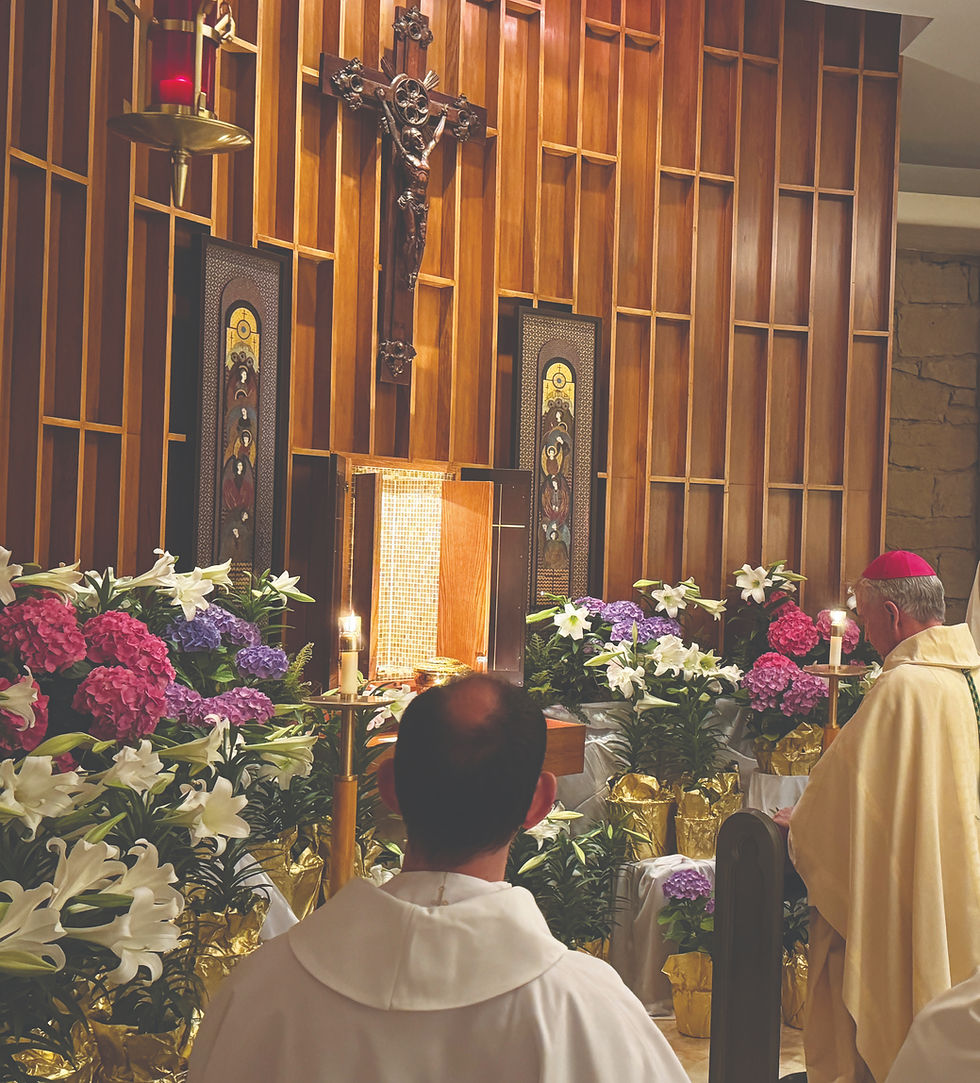
The Sacred Triduum begins on Holy Thursday with the Mass of the Lord’s Supper, when the Church commemorates the institution of the Eucharist and the priesthood. On the night before He died, Jesus freely offered Himself in advance through the sacrament of His Body and Blood.
“At the Last Supper … our Savior instituted the Eucharistic sacrifice of His Body and Blood” (CCC 1323).
In the Eucharist, Christ does not give a mere symbol but His very sacrifice, making present the saving event of Calvary. Thus, “the Eucharist is … a sacrifice because it re-presents (makes present) the sacrifice of the cross” (CCC 1366).
What begins sacramentally in the Upper Room reaches its historical fulfillment on Calvary, revealing the profound unity between the Eucharist and the Cross. As the Catechism affirms, “Jesus gave the supreme expression of His free offering of Himself” at the Last Supper (CCC 610).
At times, some Christians misunderstand the Catholic teaching on the Eucharistic sacrifice, thinking Christ is sacrificed again at every Mass. The Church teaches clearly that Christ’s sacrifice occurred once for all on Calvary and cannot be repeated. Rather, the Eucharist makes that one sacrifice sacramentally present so its saving grace may be applied to every generation.
“The sacrifice of Christ and the sacrifice of the Eucharist are one single sacrifice” (CCC 1367).
The Church does not add to Christ’s offering; she enters into it. In this way, the faithful of every age are brought spiritually to the foot of the Cross to receive the fruits of redemption. Through the Eucharist and the priesthood, Christ ensures that His saving sacrifice remains present throughout history.
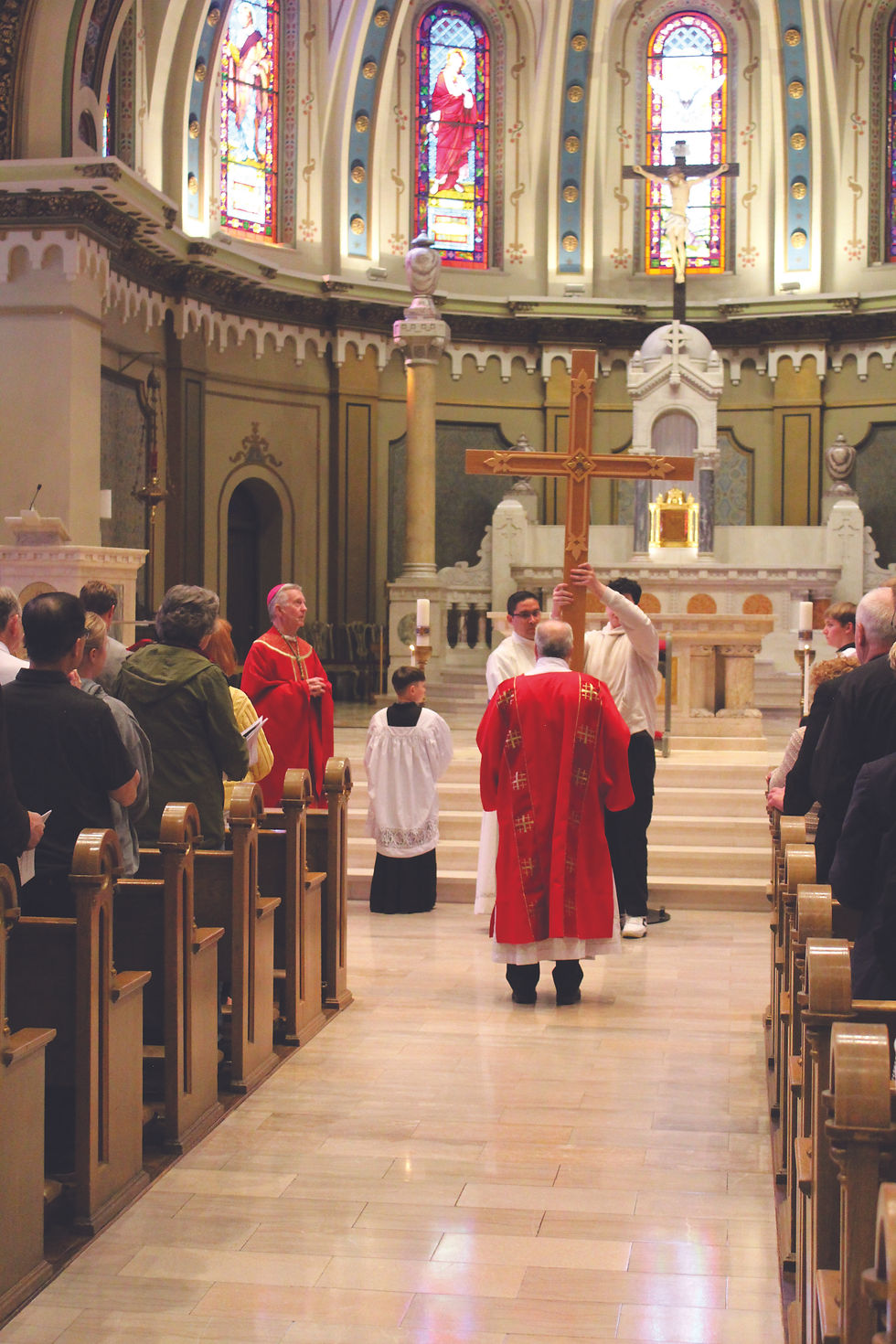
The mystery begun in the Upper Room reaches its fulfillment on Good Friday, when the Church contemplates the Passion and death of Christ. Through His suffering and death, Jesus accomplished what humanity could not: “Jesus atoned for our faults and made satisfaction for our sins” (CCC 615).
Sin had broken communion with God, and humanity could not restore it. But Christ, true God and true man, offered the perfect sacrifice of obedience and love, fulfilling the prophecy of the suffering servant who “makes Himself an offering for sin” (CCC 615). The Cross reveals both the gravity of sin and the immeasurable love of God.
Scripture emphasizes that Christ’s sacrifice is unique and definitive — offered “once for all” (cf. Heb 9:26–28; 10:10). The Church fully affirms this truth: the sacrifice of Calvary is complete and unrepeatable. Yet Christ willed that this one sacrifice remain accessible through the Eucharist. Thus, the Mass does not multiply sacrifices but makes present the one saving sacrifice so its grace may be received in every age.
As the Catechism teaches, “Christ’s death is … the Paschal sacrifice that accomplishes the definitive redemption of men” (CCC 613). Through it, the world is reconciled to God — “God was in Christ reconciling the world to Himself” (CCC 433) — and our justification is won, since “justification has been merited for us by the Passion of Christ” (CCC 1992). Good Friday stands at the center of the Triduum, revealing both the cost of our salvation and the depth of divine mercy.
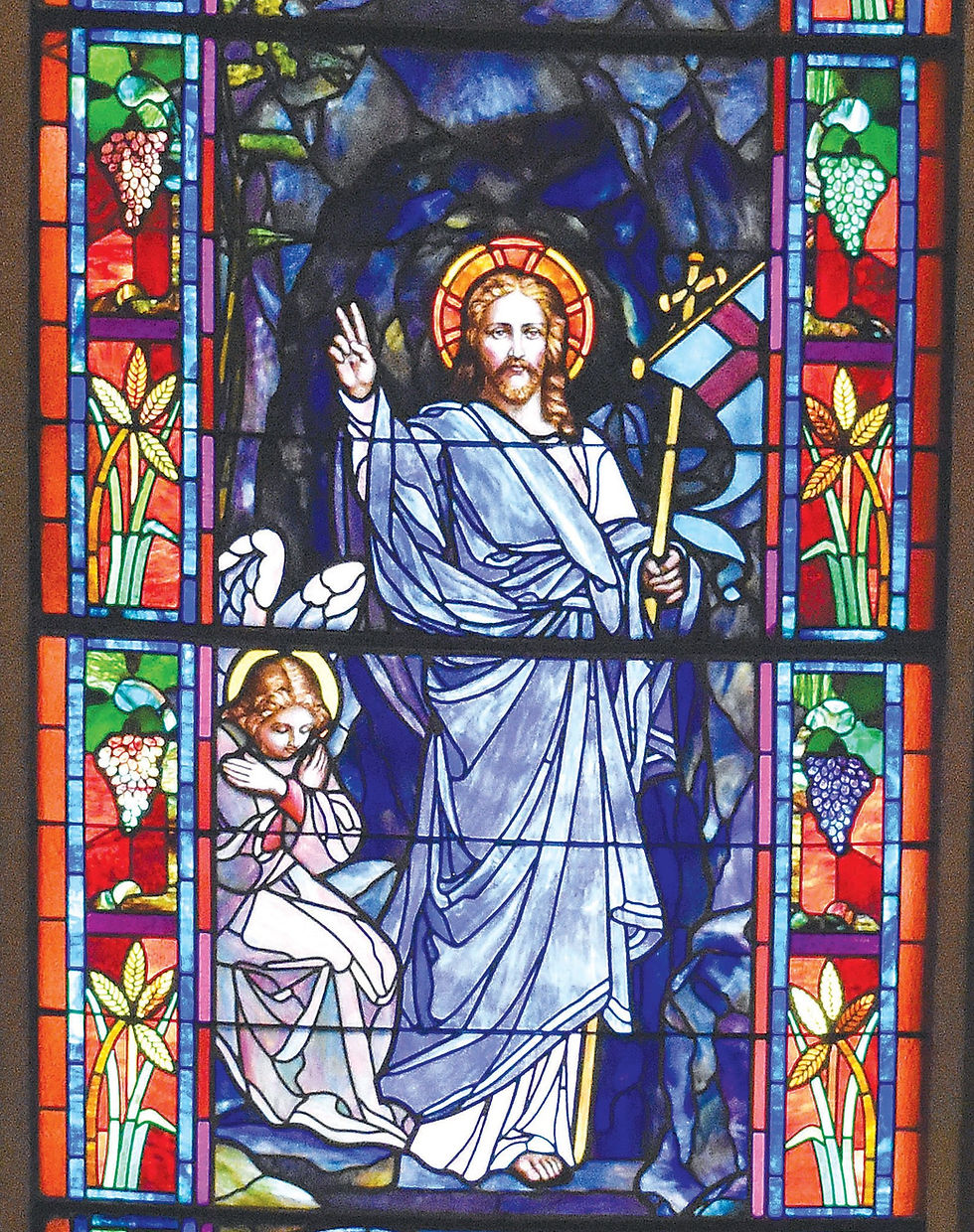
The sorrow of Good Friday gives way to the radiant joy of the Easter Vigil, when the Church proclaims Christ’s victory over sin and death. The Resurrection is the foundation of the Christian faith: “The Resurrection of Jesus is the crowning truth of our faith in Christ” (CCC 638).
By rising, Christ confirms that His sacrifice has conquered sin and opened the way to new life. As the Catechism teaches, “just as Christ was raised from the dead … we too might walk in newness of life” (CCC 654).
Through the Resurrection, we are restored to the Father and given access to divine life, for “the Resurrection of Christ has opened for us access to a new life” (CCC 654). It also grounds our hope of eternal life, since Christ is “the first fruits of those who have fallen asleep” (CCC 658).
The Easter Vigil is also the moment when the fruits of Christ’s victory are manifested through the Sacraments of Initiation. Catechumens receive Baptism, Confirmation and the Eucharist, while candidates are received into full communion with the Church.
Baptism unites us to Christ’s death and Resurrection, so that “we too might walk in newness of life” (cf. CCC 628; 654).

In the Diocese of Boise, we are blessed each year to witness many entering the Church at the Easter Vigil. They come seeking the fullness of God’s revelation in Christ and His Church, sustained by the Holy Spirit.
Their journey is a powerful sign of the Church’s living mission and a reminder to all Catholics of our fundamental vocation to evangelize and invite others into the fullness of faith and sacramental life.
Taken together, the liturgies of Holy Thursday, Good Friday and the Easter Vigil reveal the full mystery of our salvation.
Through them, Christ redeems us, reconciles us to the Father, justifies us through grace, and restores us to divine life. As the Catechism beautifully summarizes, “The whole of Christ’s life is a mystery of redemption” (CCC 517).
The Holy Triduum invites us not merely to remember these events, but to enter into them. Through the sacraments — especially the Eucharist — we participate in Christ’s saving death and Resurrection and receive the grace that flows from them.
These sacred days proclaim the deepest truth of the Gospel: God has not abandoned humanity. Through the Cross and Resurrection of His Son, He has opened for us the path to reconciliation, new life and eternal glory.
Therefore, with the whole Church, we proclaim, “Christ is risen. He is truly risen!”


Comments