.png)


The home that gave the Church six priests and two nuns


By Vero Gutiérrez,
Assistant Editor
Sonia Llauró de Ibarra had 12 children over the course of 20 years. Six of her children are priests, two are nuns, three are married, and one daughter passed away at a young age. From the simplicity of an Argentine home and sustained by a deep trust in God, Sonia Ibarra’s life became an extraordinary testimony of faith and family devotion.
Together with her husband, Diego Ibarra, she embraced the fullness of the Catholic faith, raising a family grounded in prayer, service, and openness to God’s call. Over the years, this atmosphere of faith bore fruit in numerous vocations to serve the Church.

Speaking about having so many sons and daughters consecrated to God, Sonia says with emotion: “I cannot begin to explain what we have received by trusting in God’s call to our children and what He wanted to give them.”
Sonia was born into a Catholic family in Buenos Aires, Argentina, though they were not practicing the faith. At age 18, she married Diego Ibarra. During the early years of her marriage, she underwent a profound spiritual conversion after participating in the Spiritual Exercises of St. Ignatius of Loyola.
From that moment on, she has completed the Exercises every year. “It changed my life, and I realized it was a very important means for the conversion of souls,” she said. “It was a way to fill myself with God so that I could fill the children with God. If one is not filled with God, one cannot give anything,” she explained.
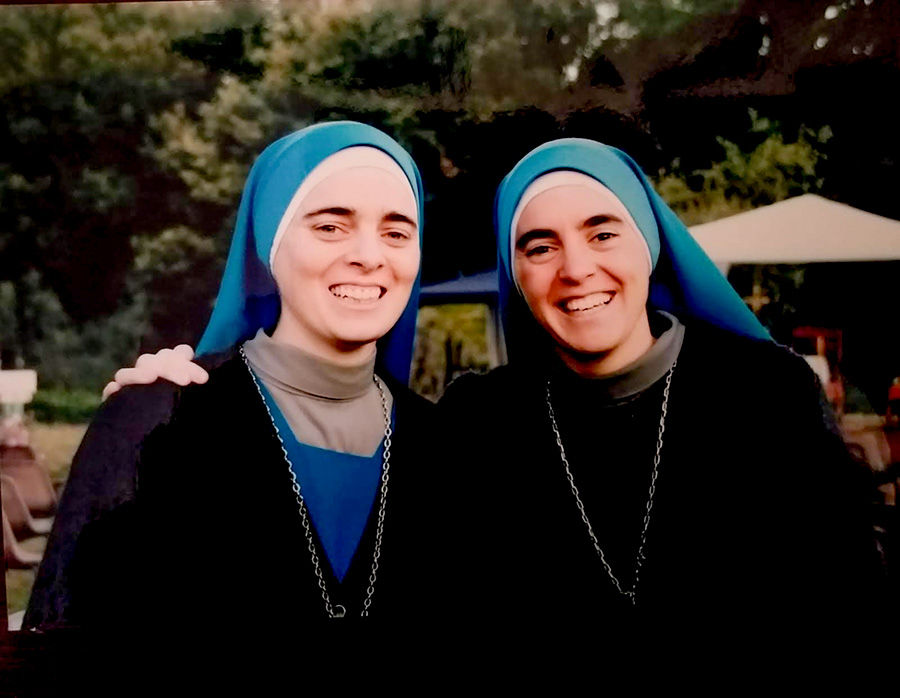
Prayer with the children became a constant practice in the Ibarra home. They prayed the rosary as a family and participated in moments of adoration before the Blessed Sacrament daily. Sonia acknowledged that it wasn’t always easy because the children could get restless. However, she emphasized the importance of mothers introducing their children at a young age to the presence of God in the Blessed Sacrament.
Sonia encouraged mothers to generously support their children’s vocations when they discover a special calling from God. “If God calls them to consecrate themselves to Him as priests or religious individuals, it is so that they may be happy and become great saints. He does not call them to make them unhappy,” she affirmed.
She compared a vocation to a small flame that ignites a candle. “Do not extinguish that small flame, mothers and fathers,” she urged. “If your son wants to enter the seminary, don’t be afraid to entrust him to God. Be strong and generous. Give your children the means to follow God’s call.”
“As a mother, I understand what you are going through. When grace comes, it is important that you know how to recognize it.”

Sometimes, when sons tell their mothers that they want to become priests, the mothers object because they think their sons are too mischievous or disorganized to live a disciplined life. “Maybe the boy fights with his sister, is distracted, or restless,” Sonia remarked.
However, she assured us that God does not wait for to be perfect children, before He calls them. “If that were the case, none of our children would have been called,” she added. She explained that God calls everyone with their own qualities. She also noted that upon entering the minor seminary, young men begin a process of discernment and formation where their vocations can grow and mature.
After learning about the “miracle” of vocations that occurred in the small town of Lu Monferrato, Sonia and a group of mothers whose sons were priests or daughters were religious sisters decided to come together in organized prayer.

Thus, with the help of priests, a new apostolate began to take shape, and a website was created to coordinate the 40 Hours of Adoration—a magnanimous initiative aimed at rekindling the hearts of mothers and assisting God in the salvation of souls.
In the book A People Unique in the World: The Secret of Lu Vocations, a group of women united their prayers with a single intention: to ask God for an increase in vocations.
Bishop Demetrio Fernández of Córdoba, Spain, is quoted as saying that “It is necessary to create a vocational climate so that a child, teenager, or young person can clearly perceive God’s call and respond without major difficulties.” In Lu Monferrato, this duality of prayer and a vocational climate bore fruit in the form of 323 priests and religious men and women.
Inspired by the community’s prayers and adapting the Forty Hours Adoration format, Sonia Ibarra and a group of women have carried out this adoration for twelve years without interruption. It has now spread internationally.
Every month, 40 hours of adoration are held on the 14th, 15th, and 16th in remembrance of the time Jesus remained in the tomb.
During these days of monthly adoration, participants can dedicate one, two, or more hours to prayer. Any woman, anywhere in the world, can participate by offering this time for the sanctification of priests and an increase in vocations to the consecrated life.
The website is www.40horas.org. All you need to do is register with your name and choose the date and time you’d like to participate. You can also join via WhatsApp using the number +541551773843.
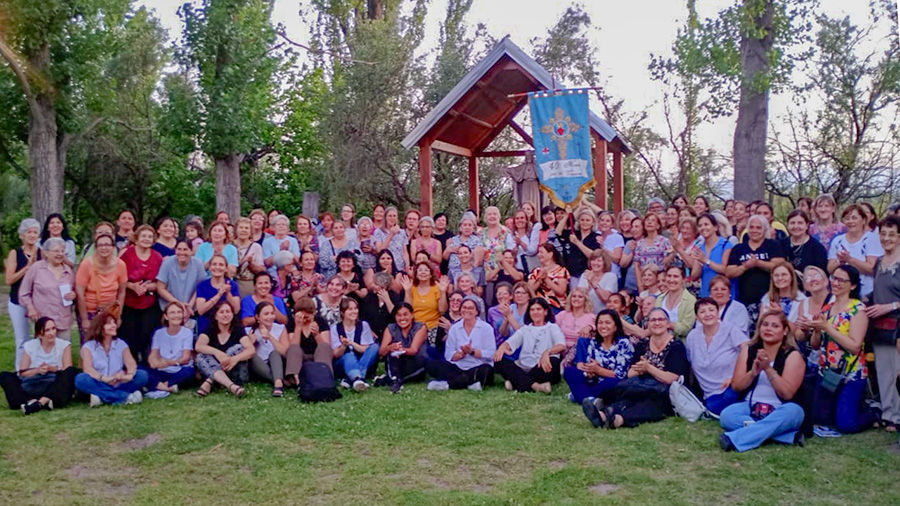
Sonia said the best way to participate is in adoration before the Blessed Sacrament. However, she explained that you can also do it from home by preparing a special prayer space, lighting a candle, and placing it in front of a sacred image.
She added that women who devote their time to caring for young children, tending to the sick, or performing household chores such as cooking can also offer these moments to the Lord as part of their prayer and devotion.
“What we seek,” said Sonia, “is to move the heart of Jesus, who hopes to be moved by our prayers as we ask for an increase in vocations, as well as for the holiness and perseverance of priests and religious.” She added that He is always willing to grant us more than we need.
“We ask for blessings for all priests facing doubts, attacks, and temptations so they may remain steadfast in their vocations,” said Sonia.
She also noted that they pray for young people being called to a life of consecration, so that they may overcome obstacles and take the step of entering the seminary or novitiate.
Vocations flourish between home and the parish.
“We have to return to evangelizing,” Sonia acknowledged. She noted that the great challenge today is that people are opposed to the faith, unlike when the first missionaries arrived to evangelize our countries and people did not know the faith.
“It’s important for parishes to build community. The parish must provide families with everything they need so they return to the community. They must find the Good Shepherd who will shelter them—a community where charity and generosity are practiced.”
“The role of women in the family is important, and they have a special gift for intimacy with God,” Sonia emphasized. “I believe the way forward is to empower women and families once again so they can nurture those little flames. Those who marry can also choose good partners and establish holy families.”
“We must make the lives of the saints visible to children and bring them closer so they can see the saints as models of life. If they have devotional readings, God kindles little flames in their hearts through them,” Sonia said.

This is all part of the effort of mothers, whose role, as Sonia recalled, was also recognized by St. John Paul II as a mission to collaborate with Jesus in the salvation of souls. “Our motherhood extends not only to our family but to the whole world,” she said.
If we want our children to be saints, the power of prayer is very important. If we ask for this with all our hearts, our children will become great saints because God is faithful to his promises and unmatched in his generosity.
“God has asked us and commanded us to pray for vocations,” said Sonia, recalling the Gospel of Matthew 9:38, “Ask the owner of the fields to send workers for his harvest.”
She emphasized the importance of giving the Virgin Mary a special place in one’s family because, as she said, “the Virgin Mary is everything.” “Consecrate your children to the Virgin Mary. On your knees, tell her, “I entrust them to you so that you may make them holy.” The saints have done just that—consecrated themselves and their families to the Blessed Virgin.
For priests, she recommended consecrating the parish community to Jesus through Mary.


Comments